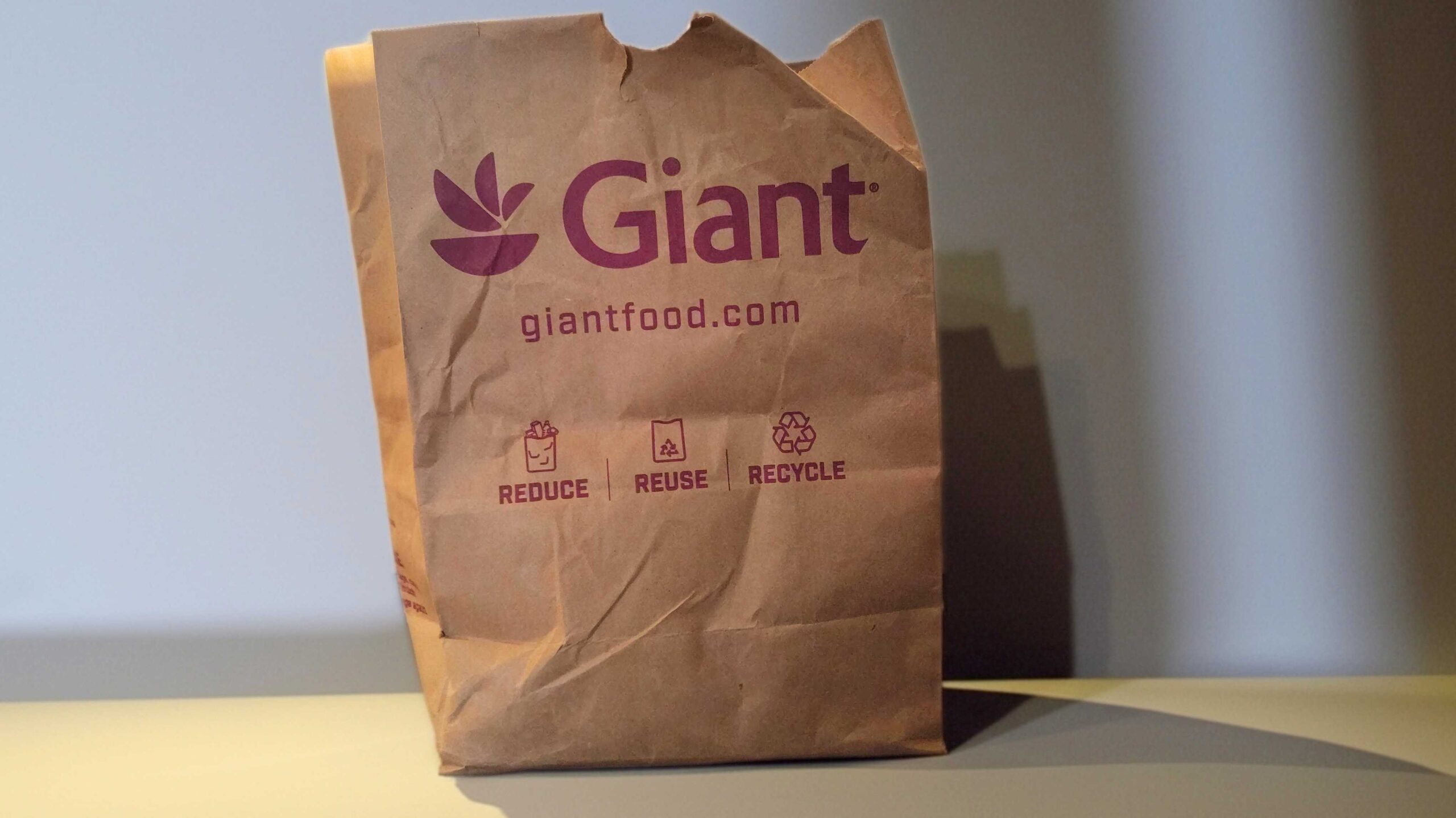

A viral social media exchange across the Washington metropolitan region has ignited a broader consumer backlash over grocery store paper bags, with shoppers pointing to high tear rates, shrinking dimensions, and a glaring lack of handles as added burdens on their wallets.
The outrage surfaced in a widely circulated Nextdoor discussion thread initiated by Depriest Monroe of Coral Hills/Capitol Heights. Monroe called out the regional grocer directly, stating that Giant “has gotten ridiculous” since bag fees expanded across local jurisdictions.
“I noticed that their bags have gotten a lot smaller and they have gotten a lot thinner. So this forces you to use more bags,” Monroe wrote, pairing the critique with an image of a grocery bag that tore apart during ordinary packing. “This is a bag that I attempt to use that ripped while I was putting the items in the bag.”
The post swiftly accumulated more than 250 reactions and dozens of replies, morphing into a regional sounding board for consumer frustration.
The Montrose Crossing Reality
While digital discussions spanned multiple jurisdictions, the issue is on full display at the Giant Food located in Rockville’s Montrose Crossing shopping center (12051 Rockville Pike) .
At the Montrose Crossing location, the store’s utility paper carryout bags do not feature handles. For car owners pushing a full cart out to an adjacent parking lot, loading unhandled sacks directly into a trunk is manageable. However, for suburban pedestrians, transit riders navigating Rockville Pike, or rushed shoppers stepping in for a quick, unplanned purchase without personal totes, hauling multiple heavy, handle-free paper sacks is an awkward physical challenge. Add paper that easily splits along seams or punctures under modest carton weight, and the trip home quickly turns into spilled groceries on the sidewalk.
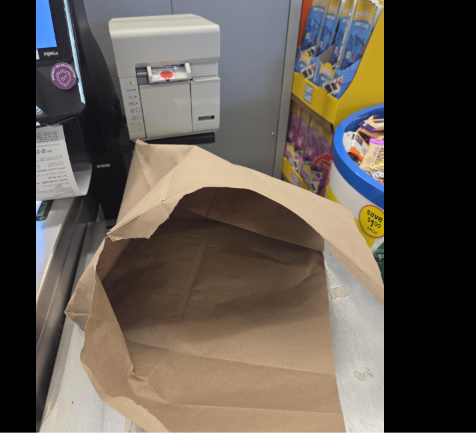
Shoppers speaking on background describe frequent tearing before reaching the curb, requiring either delicate cradle-carrying or improvised double-bagging at checkout.
Regional Shoppers Cry Foul
Commenters responding to Monroe’s thread echoed nearly identical experiences, with several framing the shift in bag construction and pricing as a retailer-favored grift.
“Yes, these stores are taking advantage of us now with this bag fees,” commented Tayo Akins of Peppermill Village. “Yes, some stores reduced the size of their paper bags forcing you to pay for more. This policy was clearly developed by and for business owners and has nothing to do with the environment. All the money goes to the businesses and nothing goes to any environmental causes.”
Stephanie Graves of Trinidad argued that customers are “charging more for cheaper subpar packaging,” while Sandra Nance of Mt. Pleasant plainly called the dynamic “Capital greed!”
Others emphasized the pure structural inadequacy of the current bags:
- Rosalind F. of Victoria Falls noted: “Yes, they’re extra thin for grocery bags. Most stores have thicker bags with handles. I take my own because at Giant they will rip before you get to your car.”
- Troy M. of Indian Springs shared: “I definitely have taken pictures of broken and burst Giant bags recently… Safeway bags are pretty solid.”
- Kevin Henry of North Pointe lamented: “Those are some Bozo, no name brown bags. They tear as soon as you drop a feather in the bag, and that’s if they don’t start splits up when you first try to open them up.”
- Dave Hollingsworth of Temple Heights questioned why Giant fails to provide baseline features: “I wonder why these stores do not make available paper bags with handles (like what Harris Teeter does for instance).”
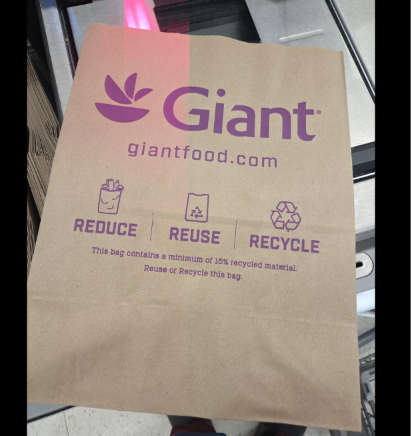
Not all community members viewed the situation with sympathy. A vocal faction of commenters argued that the controversy is avoidable personal error, urging neighbors to build consistent habits. “Sounds like a non-issue,” wrote Olu Are of Morningside. “Carry reusable bags and your issue is solved. They even sell bags by the register.” Janeen Feinberg of Courthouse cautioned neighbors against overreacting to minor costs, writing, “I fear we are veering into first world problems.”
Policy vs. Product Quality
The frustration intersects directly with the legislative mandates governing retail packaging across the region. Under Montgomery County’s Bring Your Own Bag Law, retailers charge a 10-cent tax for paper carryout bags.
Crucially for consumers scrutinizing store receipts, that 10-cent charge is not kept entirely by the county: the retailer retains 5 cents of each bag fee, while the remaining 5 cents is remitted to the county to support environmental and water protection programs .
While the statutory law governs fee collection, plastic prohibitions, and administrative tax remittance, it establishes no enforceable durability, tensile strength, or handle requirements on the paper carryout packaging retailers purchase from commercial distributors . The resulting dynamic leaves customers paying required fees for products that can fail before they reach their destination.
Taking Action as a Consumer
Shoppers dissatisfied with flimsy, handle-free carryout bags do not have to absorb the loss silently. Consumer-advocacy steps include:
- Log Complaints with Store Leadership: Call Giant Food’s regional customer service line or ask for the store manager on duty at your local branch, specifically citing structural bag defects and requesting handled inventory.
- Post Documented Reviews: Leave detailed, photographic reviews on platforms like Google Maps and Yelp for specific locations—such as Montrose Crossing—highlighting the packaging quality and practical difficulty for non-motorized shoppers.
- Petition County Environmental Regulators: Reach out to the county administration via MC311 or through the county’s Bag Law Portal. Consumers can urge local lawmakers to condition mandatory paper bag fee allowances on reasonable packaging durability and functional handle standards.
- Know Exemption Rules: Retailers are prohibited from assessing the carryout bag fee to customers using SNAP or WIC benefits; ensure cashiers correctly bypass these charges at checkout .