


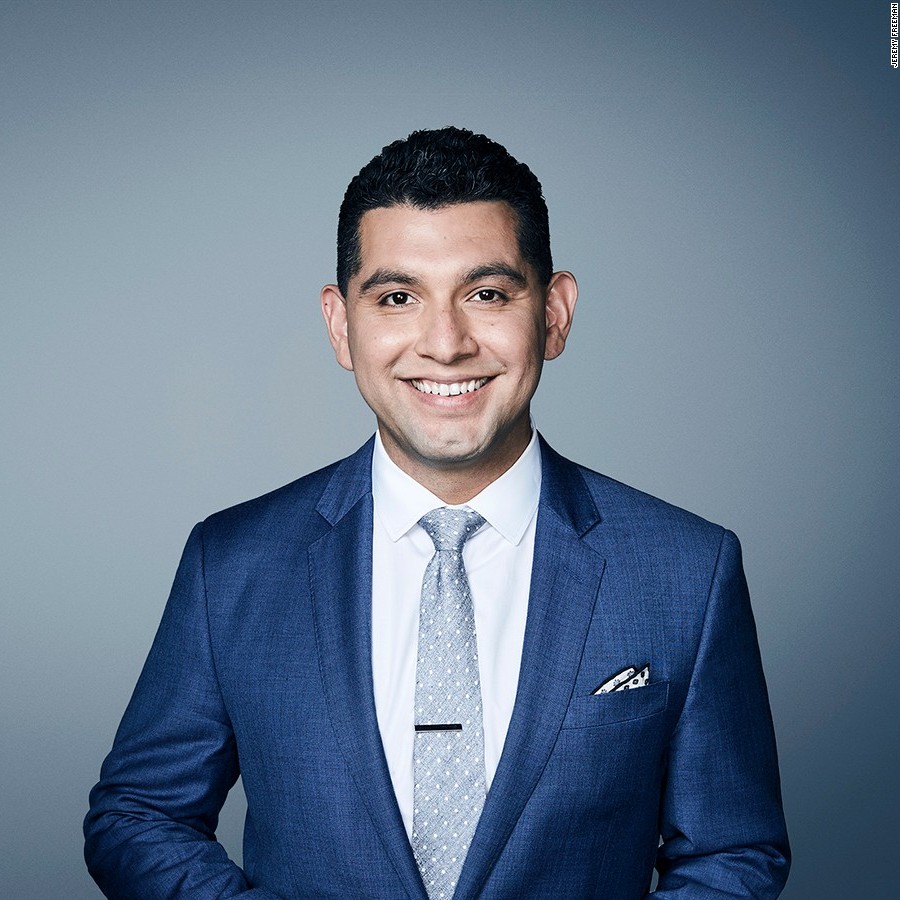
By TANTV News, Nick Valencia for Nick Valencia News.
In Pennsylvania’s 7th Congressional District—one of the closest House races in the country—Democrat Bob Brooks sent a radio DJ in his place, while Republican Rep. Ryan Mackenzie’s office never responded. So Nick Valencia took the questions straight to Allentown’s doorsteps.
Reporting Highlights
- A seat on a knife’s edge: Pennsylvania’s 7th Congressional District was decided by about 4,000 votes in 2024. More than 1 in 5 residents are Latino, and in Allentown it’s more than half.
- Candidates out of reach: Over seven days, neither Democrat Bob Brooks nor Republican Rep. Ryan Mackenzie agreed to an interview. The Brooks campaign offered a radio host who advises it on Latino outreach.
- Voters in motion: On Allentown’s doorsteps, Nick Valencia found a Trump voter who now regrets her vote and is undecided, a Latino Republican who wouldn’t open his door, and neighbors who say voting doesn’t matter at all.
On a Sunday morning in late September, a Democratic canvasser climbed the steps of a rowhouse in east Allentown and knocked. The man who answered was Latino. He made clear he was voting Republican, no matter what. Then he shut the door.
Nick Valencia came back alone later that day. The man still wouldn’t open the door, but he spoke through his Ring camera. His reasons were the economy, he said, and support for law enforcement.
A few houses away, the block’s divisions were on display. One porch flew a Marine Corps flag with the American flag inside it. The next still had a Harris-Walz sign, nearly two years after that election. The house beside it had a “God Bless America” sign in the front window. Down the street, a man walking into an apartment building told Valencia he doesn’t vote. Voting doesn’t matter, he said.
These are the voters who may decide Pennsylvania’s 7th Congressional District, which covers the Lehigh Valley and part of the Poconos. Republican Rep. Ryan Mackenzie won it in 2024 by about 4,000 votes, beating Democrat Susan Wild 50.4% to 49.4%. That was the closest House race in the state that year. Independent forecasters rate this year’s race, Mackenzie against Democrat Bob Brooks, a toss-up. Control of the U.S. House could turn on it.
More than 22% of the district’s residents are Latino or Hispanic. In Allentown, its largest city, the figure is about 56%. Many have roots in Puerto Rico and the Dominican Republic. Both campaigns have announced outreach efforts aimed at them.
Over seven days, from Sept. 22 to Sept. 28, Nick Valencia News and our TANTV News team tried to put the two candidates in front of those voters. Neither agreed to an interview. Valencia went anyway. He spent his time with the people the campaigns say they are fighting for, and with a radio host the Brooks campaign put forward as its stand-in.

A Shifting Electorate
Latino voters in Pennsylvania have long voted Democratic by wide margins. That is changing. In 2024, about 4 in 10 Latino voters in the state backed Donald Trump, up from 3 in 10 four years earlier, according to NBC News exit polls. In Philadelphia’s 114 majority-Latino precincts, Trump’s share rose from 6.1% in 2016 to 21.8% in 2024, an Inquirer analysis found.
The shift is sharpest in the small and midsize cities of eastern Pennsylvania. One analyst calls Latino voters there the state’s “ultimate swing vote.”
Connie, a canvasser Valencia shadowed in Allentown, agreed. “I don’t think so,” she said when Valencia asked whether that label went too far. “I really honestly don’t think so. I think actually in the last election there was some nationwide talk about the city of Reading, which is very heavily populated with Latinos. And so they were focusing on that area.”
Both campaigns have taken notice. Mackenzie launched a “Latinos for Mackenzie” coalition this summer. It includes George Rivera, chair of the Lehigh County Republican Committee. Rivera told NBC10 that Latino voters are drawn to Republican values around family, faith, fiscal responsibility, and safety. In February, Mackenzie met in Washington with Puerto Rican and Dominican community leaders, including Puerto Rico Senate President Thomas Rivera Schatz, according to his congressional office.
In early September, Brooks launched a Latino outreach initiative and a Latino Leadership Council in Allentown, according to The Morning Call and his campaign’s Facebook page. He has campaigned in Spanish-language settings as “Bombero Bob,” a nod to his 20 years as a Bethlehem firefighter. He is now president of the Pennsylvania Professional Fire Fighters Association.
Chasing the Candidates
The reporting began on Sept. 22, the day after Valencia and our team at TANTV News learned a joint project on Pennsylvania’s Latino voters had been approved. Valencia, an independent journalist who runs Nick Valencia News, met with me over video that morning with (TANTV EIC Adedayo Fashanu). By that night, we had settled on the 7th District and contacted Brooks’ campaign manager, Jenna Kauffman, to request a sit-down with the candidate.
The next morning, our TANTV News team sent Valencia’s team a research brief on the race, and they began reaching out to Mackenzie’s team. Valencia also spoke with the executive director of UnidosUS, the national Latino civil rights organization, about finding voters to interview.
By late morning on Sept. 23, the Brooks campaign had offered two options. One was an event at the SteelStacks in Bethlehem on Saturday, Sept. 26. The other was a baseball game on Sunday morning. The campaign described both as events centered on the Puerto Rican community.
That evening, the offer changed. The campaign said Brooks was too busy to meet that weekend. It offered a surrogate instead: a popular radio DJ and social media personality who is part of Brooks’s Hispanic coalition and helps with the campaign’s Latino outreach.
On Sept. 24, our TANTV News team published a call-out announcing the collaboration and asking Latino voters in Pennsylvania to share their stories. Valencia recorded a one-minute video for social media. Within a day, we had lined up a Democratic canvassing team to shadow in Allentown, a voter willing to talk on camera, and a former congressional candidate who knew the community.
On Sept. 25, the Brooks campaign told Valencia it had not known the logistics of the Sunday game, which had been set for 9:30 a.m. We found a campaign photo of Brooks in front of an Allentown ballfield and tried to locate the game but to no avail.
On Sept. 26, we flagged a pregame event at that night’s Phillies game at Citizens Bank Park in Philadelphia where Brooks might appear.
Valencia’s flight landed at 6 p.m. He sat on the tarmac, picked up a rental car, and drove straight to the stadium, recording along the way. Entry required a paid ticket. Outside the gate, he called the Brooks campaign on camera to ask whether Brooks would reconsider. He would not.
Valencia drove an hour north to his hotel in downtown Allentown. The Brooks campaign never responded to further interview requests.
The Mackenzie campaign was harder to reach. On Sept. 23, emails we sent to addresses for the congressman’s communications staff bounced back. That day, I personally reached his congressional office by phone. An aide who identified himself as Ralph Sumpter said he would pass the interview request to the communications team. He declined to give me an email address.
That night, I emailed Andres Weller, Mackenzie’s deputy chief of staff, and we sent another follow-up email on Sept. 26, which went through. Neither Mackenzie’s congressional office nor his campaign ever responded. Mackenzie has argued publicly that voters deserve to see the candidates side by side before mail ballots arrive. He agreed to September debate dates; Brooks did not. The two are scheduled to debate on WFMZ’s “Business Matters” on Oct. 21, with the broadcast airing Oct. 26. We will see if either truly shows up.

On the Doorsteps
On Sunday, Sept. 27, Valencia met a Democratic canvassing team at Keck Park in Allentown at 11 a.m. They worked three lists of homes in the same east Allentown neighborhood: a working-class block with a mix of Republicans, Democrats, and people who don’t think voting matters at all.
The first voter they reached was an older Latina Democrat, enthusiastic about the election.
“My name is Connie Santos, and I have been doing this type of work, canvassing and voter registration, since 2017 when I retired from the Department of Welfare after 27 years. So, the goal here is to actually talk to people. My goal is always to get somebody to come to the door because that’s the only way. And hanging a flyer by the door, a poster hanger on a door, is not going to do it. You need to have conversations with people.
Fun fact about me is that I actually live in Jamaica. And so I came up here for my granddaughter’s sweet 16, and I decided to stay for this election because this election is extremely important for all of us”
Then came the door that shut on the canvasser, the Republican who answered by Ring camera, and the man who said voting doesn’t matter.
The canvasser described how hard this election has been for both parties.
“Sometimes they see me as a white woman not being able to communicate, so they’re fearful, and then I usually will say something in Spanish, and then they soften up,” said Connie, one of the canvassers. “Most people, once I start talking to them, there’s no problem. But sometimes it’s just getting them to open up the doors. Especially in the climate right now that we’re in.”
After the door closed, Connie recounted what the man had told her: “I’m a Republican. I will be voting.”
Valencia asked whether there were a lot of Latino Republican voters in the neighborhood.
“Unfortunately, yes,” she said. “We all have our preferences, but we have to vote for what’s good for us. And some people, I don’t believe, really understand how their vote affects their own lives. Unfortunately.”
By the end of the morning, Valencia had come to see the story less as one about the candidates and more as one about the community.
“She Regrets It”
At 1:30 that afternoon, Valencia sat down at an Allentown restaurant with two women.
The first was Rosaida. She voted for Trump in 2024. She told Valencia that she regrets it.
“I did vote for Trump years ago. I don’t even know who I’m going to vote for because I don’t trust the process like many other Latinos… because we’re seeing so many things, promises, promises, promises but nothing happens
With about a month until Election Day, she said she is still undecided. She is not sold on Brooks. In the Democratic primary, she had backed someone else: Carol Obando-Derstine. Obando-Derstine had knocked on doors throughout the community during her campaign and connected Valencia with voters like Rosaida.
Obando-Derstine is a Colombian immigrant, an energy engineer and a former senior adviser to U.S. Sen. Bob Casey. She entered the race in 2025 at the urging of Wild. In the May 19 primary, she finished fourth with about 17% of the vote, according to City & State Pennsylvania. Brooks won with about 42%.
Brooks’s win came with an unusual boost. Gov. Josh Shapiro endorsed him in the primary, a step governors rarely take in contested primaries. Obando-Derstine told Valencia she believes the endorsement cost her the race. She said she still plans to vote for Brooks in November.
When asked (Rosaida) if it takes a Latino candidate to get her or the Latino vote, she responded with a sharp “Not necessarily!” Pressed on what it would take or like to see for Bob Brooks or Congressman McKenzie to get her vote,
“Like, the only thing I hear about Bob right now is the Bombeto, the commercial about the Bombeto. I haven’t seen him with the Latino community. I haven’t seen his speech, like, what he’s going to do for us. Unlike Carol Obando-Derstine, Carol was there all the time, everywhere, and she would tell you what she would do. This guy, I don’t even know him. McKenzie? I went to one of his speeches and same thing. It feels like fakeness, you know, it’s not real. I don’t see it. I don’t see it there.”
Rosaida says, “Like other undecided Latinos, we need to educate ourselves in politics. I will admit it”
Rosaida’s path is the kind of thing the parties’ coalitions and councils are built to address, and the kind they can miss. She left the Republican column, and she doesn’t yet have a reason to join the Democratic one.

The Surrogate
At 6:30 a.m. on Monday, Sept. 28, Valencia arrived at the radio station for the interview the Brooks campaign had arranged. The host was Victor Martinez, owner of La Mega radio; he is part of the team backing Brooks.
Days earlier, Valencia had found Victor listed among Brooks’s Latino ambassadors in a Sept. 2 Politico Playbook newsletter. Valencia said Victor had told him he was not part of the Brooks campaign.
The mood in the studio was tense at first and eased once the show got going.
Valencia asked Victor directly whether the Brooks campaign pays him. He said no.
He described his role this way: he is part of the Hispanic coalition, and Obando-Derstine was his candidate in the primary. After Brooks won, Brooks reached out and offered him a seat at the table. He now advises the campaign on how to win Latino voters.
If Brooks doesn’t deliver for the community, Victor said, he will be the first to say so.
Before the interview, the campaign presented Victor as a surrogate. There is no legal requirement for an unpaid adviser to disclose that role to listeners. That leaves audiences to work out for themselves whether the voice on the radio is a neutral host or part of a campaign.
On air, Victor introduced Valencia to listeners as “an independent journalist with many years at CNN” who wanted to hear from them. Valencia, he said, had reached out to ask, “What are Latinos saying? What’s the feeling about voting?”
Before opening the phone lines, Victor delivered a sharp critique of the Trump administration’s economic record. “Don’t come and manipulate the numbers. Don’t tell me everything is fine because people are earning more money,” he said in Spanish. “Yes, but they’re spending double or triple.” He told listeners gas cost $3.11 when Biden left office and now costs $4.50. “Thank you for nothing, Mr. President,” he said in English. He also told listeners that 760,000 people would lose health coverage.
Before opening the lines, Martinez asked Valencia a telling question: “What is it that you want to hear?” Valencia told him, and within those 20 minutes, the show took calls that delivered almost exactly what we were looking for. The callers mirrored nearly every viewpoint Valencia had found on the streets of Allentown the day before. The timing was so seamless it raised suspicion—when a broadcast produces a perfect lineup on command, it often feels too good to be true, leaving open the question of whether the calls were staged, organized, or placed by the show like paid operatives. Martinez, however, maintained on air that he was not being paid by the Brooks campaign.
Valencia asked each caller’s name; the first gave his full name, and the others gave first names only. One caller said he had voted for Trump and is now voting for Democrats. Another was a committed Democrat with no patience for Republicans. The last said voting doesn’t matter because politicians are all corrupt.
The first caller gave his name as Manuel Cavera. As Victor relayed it on air, Cavera had voted for Trump the first time he voted and now regrets it.
Victor summed up the call on air in Spanish: “Look at how interesting it is that the first call we’re getting, Nick, is from a person who supported Trump, who voted for Trump, and who says, ‘Look, unfortunately he’s not doing what I wanted, and I don’t support him.’”
A caller who gave her name as Evelyn described what is happening to immigrants as “a persecution of our people.” Valencia had asked whether immigration or the economy had mattered more to her vote. Victor said the two issues were “tied hand in hand.”
Victor also responded to a caller on Trump’s stance on immigration. “He’s a man who came from immigrant parents,” Victor said. “His current wife, the first lady of the United States, is an immigrant. So why, why, why this constant attack on immigrants?”
Valencia used his time on air to ask callers about the voters he had met the day before. He told one caller about a Latino man in Allentown who had said, “I’m going to vote Republican 100%,” on a street with American flags, a Harris-Walz sign and a “God Bless America” sign. He asked her what she would say to a Latino who is still voting for Trump and Republicans.
“Don’t be fooled,” Evelyn said. “I’ve had clients who tell me, ‘No, I’m going with the Republicans, and with the Republicans I’ll stay.’ And I tell them, ‘Well, the time will come when your money won’t be enough…’ They don’t help us at all; they take from us, and every day we sink deeper into debt.”
He asked another caller what she would tell fellow Puerto Ricans who say voting isn’t worth it. “That’s not my opinion. I think it’s very important,” Valencia said in Spanish. “Many died for this chance to vote.” She agreed, emphasizing the need to think about the future: “Look, I know that you saw that I wasn’t voting this year, but I’m going to vote. I think you should know because we have to think about the future of our children… We can do something; we can go out and vote.”
Another caller, Pedro, explained why he remains a dedicated Democratic voter: “Donald Trump and the Republicans have truly shown their true colors—they want to harm the people, specifically Hispanics… We have an obligation to ourselves and our descendants… The Hispanic people have always been hopeful, and I hope we do something better for the people.”
The segment closed with a caller who voiced deep cynicism about the political system: “Voting these days isn’t worth it,” he insisted. “They’re all the same. They’re all corrupt. The government will never change; only different parties, and the same power blinds them. The government is not afraid of the people—it’s a monopoly.”
Victor pushed back on air. “Don’t you think they’re all the same and all do the same thing precisely because they’re not afraid of the people, because they know people won’t vote?” he said in Spanish. “If more people decided to get involved, if you went out and voted, don’t you think they’d start to fear us, and things would change?”
He closed the segment the same way. “What I want is for people like you to understand that as long as politicians aren’t afraid of the people, they’re going to keep doing whatever they want,” he said.
That afternoon, before flying home, Valencia met a family affected by U.S. Immigration and Customs Enforcement. He said he helped get the husband released from ICE custody.
What’s Left
Mail ballots will reach Lehigh Valley voters in the coming weeks. The candidates are scheduled to meet on one stage on Oct. 21. Their campaigns have Latino coalitions, councils, and ambassadors.
What Valencia found on the ground was harder to organize. There was a regretful voter still waiting to be convinced, and a Republican who answered through a doorbell camera. Neighbors flew flags pointing in opposite directions. A man on the sidewalk had given up on all of it.
Before the canvass began that Sunday, Valencia asked Connie why the team was focusing on Latino homes.
“Because they need more encouragement to come out, and they need to understand the importance of coming out and voting,” she said. “They absolutely can make a big difference.”
Both campaigns were asked for interviews about how they plan to reach these voters. Neither candidate sat down.
TANTV News and Nick Valencia News reported this story. This work was supported by URL Media

