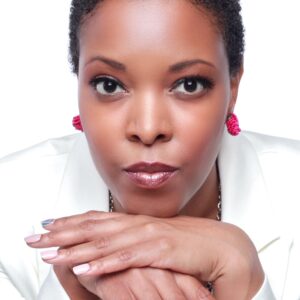
by Dr. Geneva Greene
When Institutions Fail, Community Fills The Gap.
When forced separation frequented our families, we thrived through bonds built by circumstance. My family often says, “Blood is thicker than water,” but not all ties result from shared lineage. The truth is that sometimes we choose our family members or they choose us to share love, care, and protection.
In my community, we call this our “play family,” where close friends become aunts, uncles, mothers, sisters, brothers, or cousins not by sharing blood, but by a united commitment to support each other through life’s situations. For Black people, community often meant the difference between failure and survival. Besides our intellect, innovation, and resilience, community ties allowed us to overcome challenges. I believe community building is another one of our superpowers.
Oftentimes, I consider myself a “community baby.” I was blessed with a very present, loving, and hardworking single mother, upheld by a community that supported me as a child and continues to do so as an adult.
My mother was one of nine, so that meant that I also had three other mothers that played a role in my daily upbringing and shaped the woman I became. Her five brothers were role models who, to me, represented the very finest examples of men. One uncle in particular married one of my aunts when my mom was around 10 years old. He was well situated with the family when I came along. By the time I appeared, he welcomed my sister, cousin, and I as his own children.
He took us to school, taught us life lessons, and corrected us when necessary. As our elementary school principal, his teachers also became an extension of our family. Many of them were women that I admired who also contributed to the woman that I am today. I feel that I also follow their footsteps. After nearly 30 years, they continue to show up and support my personal and professional journey, which makes me feel extremely blessed. My family’s coworkers and longtime friends remain influences in my life beyond their original bonds. They represent the power of a chosen community that exists beyond blood ties.
As an academic, my research often explores the characteristics of chosen family or “framily” and the ways that we bond, especially through dance, music, profession, or spirituality. Chosen communities create safe spaces for us to escape or experience joy. I recall the juke joint scene of the movie Sinners with Michael B. Jordan. For a moment, everyone danced, felt the music, and found freedom from the strife that lay outside of the barn doors. In the movie, Sing Sing, Black and Latino men imprisoned in the harsh realities of a maximum-security correctional facility found solace in a theatrical program. Sinners and Sing Sing depicted chosen communities and spaces that activated healing.

This photo was taken during the 2024 Fusion Festival at the Anacostia Arts Center in Washington, DC. The Go Go Fitness team taught how Go-Go dance and music promote health and nurture community.
Healing Spaces
When we encountered the coronavirus and stay-at-home mandates, the role of community in my life became clearer. A virus threatened physical illness, and racism continued to run ramped through our society. I sought ways to cope besides stocking up on cases of wine. I started a book club with Black women in my circle who desired to have honest and healthy conversations about our frustrations. I also discovered a virtual dance community through Cumbe African and African Diaspora Dance Company, which encouraged me to move and journey from Brazil to Cuba to Haiti to Jamaica through video. These communities were my refuge.
Then, DJ D-Nice introduced Club Quarantine, where he leveraged the power of hip hop deejaying to create a space for release and transcendence beyond our present realities. I tuned in to groove to old soul music or bump to hip hop tunes. The music he chose crossed genres. In my published research about Club Quarantine found here, I discuss how D-Nice’s virtual movement bonded generations and transcended geographic boundaries.
Support Through Life Challenges
During distressing times, television can also present a means for coping. For me, Starz’s P-Valley was a welcome indulgence. While presenting an opportunity for escaping, the show also represented the multitude of ways that African Americans in the southern United States navigated challenges. In the show, chosen communities meant safety for LGBTQ+ individuals and strip club dancers. “Framily” held community members accountable or allowed escapism in healthy or unhealthy ways. The show also demonstrated the complexities of spiritual communities as individuals seek healing and safety through challenges. Read more about our P-Valley research here.

Dr. Geneva Greene is pictured with her colleague Kimberly Carter as they embrace during MAY MAGIC, which centered community conversations and arts during mental health awareness month.
When society marginalizes groups, chosen communities can influence surviving or thriving beyond adverse circumstances. This is also why we established the Transformation to Triumph LinkedIn community to support the more than 300,000 Black women recently impacted in the United States by layoffs, furloughs, or major life changes.

In this photo, a professional dance instructor teaches traditional movement from Colombia’s Pacific coast, contributing to a day filled with artist exchanges that involved sharing traditions from Haiti, Jamaica, Belize, and other Caribbean nations.
Also read They’re Not Just Changing Buildings—They’re Changing Who Belongs In Southeast DC
Many of my examples hail from the United States. However, I strongly support building and bridging across the African Diaspora. We must strengthen the community across the diaspora by intentionally seeking insights and asking questions beyond what the media feeds us. We have to critically question our ideas about others we do not perceive as part of our community and seek opportunities to bond. Community building is the basis of my professional work that shapes a team training framework that I deliver for organizations through Sprouts Consulting. Without community and our environment, I do not believe that humanity can truly thrive. We are certainly stronger together. May we all take the time to celebrate our inherited and chosen communities this holiday season.
More articles from Diaspora Voices