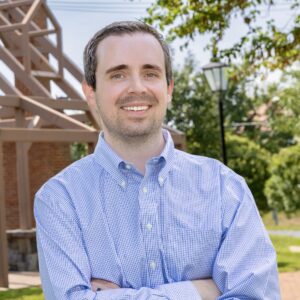
On April 16, 2027, I will stand on the House floor and read the names of thirty-two people. And I will ask one question:
Are we finally ready to say enough?
I know that day the way you know the thing that split your life into before and after. It is not a memory I visit. It is a memory that visits me — in dreams, in the wail of a siren, in the moment a room goes quiet and every instinct I have sharpens at once.
I can still recall watching the police frantically run towards the scene, brutally aware of what was happening in a moment where time seemed to literally stand still.
Gun violence is not an isolated act. It is not a headline. It is not a statistic. It is a wound that doesn’t close, but spreads. It ripples outward from the building into the campus, the church, the theater, the town. It consumes first responders, clergy, restaurant owners, parents, children. In Blacksburg, every house of worship opened its doors. Restaurants fed grieving families. Strangers held each other. An entire town absorbed the blast radius of one disturbed individual’s choices.
That’s why this is a public health issue.
It’s not just mass shootings — it’s all gun violence. The single victim. The domestic violence survivor. The child who finds an unlocked firearm. The bystander caught in crossfire. You don’t need ten victims to devastate a community. One is enough.
Like any epidemic, it spreads through the collective psyche. Virginia Tech. Newtown. Aurora. Charleston. Pulse. Tree of Life. Navy Yard. Uvalde. Parkland. The names stack until they blur together. For the people who lived them, they never blur. They calcify.
We talk about war as collective trauma. We invest billions to prevent it. Yet we tolerate a domestic crisis that leaves children haunted by memories of classmates bleeding beside them and we call it the cost of living in America.
Grown men and women wake up in cold sweats years later. I can say that with confidence because I still do. That’s PTSD.
Now I have daughters. They shoulder their backpacks every morning and walk into buildings where they practice drills my generation forced the country to adopt after we bled for it. I watch them leave and I think about what I know — about how fast it happens, about how little warning there is, about the gap between a locked classroom door and actual safety. The drills are not reassurance. They are evidence that we learned something from Virginia Tech and then stopped.
I also spent fifteen years inside the federal agencies responsible for protecting public health — CMS, FDA, the Health Insurance Marketplace, the VA. I know what happens when we treat a systems problem like a political problem. We get performative action and preventable deaths. Every time.
Gun violence is a public health crisis and it has a public health solution. We didn’t eliminate car accidents — we built a framework of accountability around them. Safety standards. Licensing. Insurance. Mandatory reporting. It worked. Not perfectly, but measurably. Lives were saved. That is the standard: not zero, fewer. If a policy prevents even one shooting, that’s not trivial. That’s a life.
Universal background checks. Federal red flag laws. Close the private sale loopholes. If you’re legally prohibited from owning a firearm, you shouldn’t be able to buy one anywhere in this country. Period. And mental health investment is not a deflection — it is a parallel crisis demanding parallel action. Ignoring either guarantees more grief.
This isn’t about confiscation. I support your right to own firearms. This is about responsibility. When you sell a car, you transfer the title. If you sell a firearm, responsibility should transfer with it — registration at point of sale, mandatory reporting, accountability when negligence puts a weapon into criminal hands. We regulate countless things in this country for public safety.
Guns should not be the one exception.
I am running for Congress as a survivor of a school mass shooting. If elected, I would be the first to serve on Capitol Hill. That is not a credential I sought. It is not something I am proud to carry.
But I carry it.
On April 16, 2027, I will stand on the House floor and read thirty-two names. My classmates. My professors. People who had no vote in what happened to them.
My daughters will have a vote. Yours will too.
This is not an unsolvable problem. It is not insurmountable. It is not beyond our capacity as a nation.
It is a choice and I refuse to accept that the cost of doing nothing is acceptable.
Not for my classmates. Not for my daughters. Not for yours.
This article was originally published on Ethan Wechtaluk’s Substack. Republished on TANTV News with permission.